

Antiques Medals Militaria
Entertainment programme at Stalag XVIII-A POW camp ww2
Entertainment programme at Stalag XVIII-A POW camp ww2
Couldn't load pickup availability
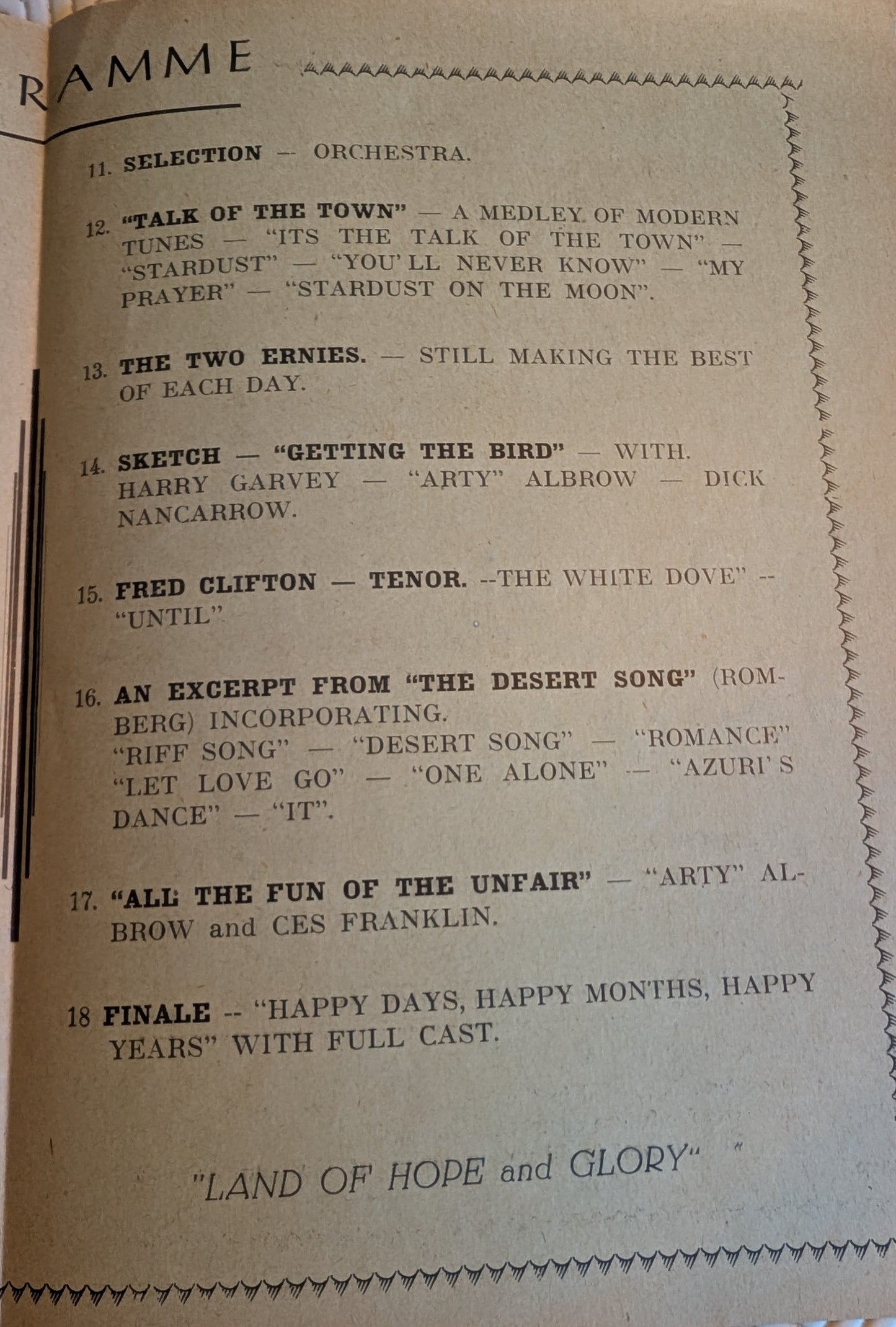
This programme was produced by the POW's fir the Hitting High show 19th june 1944 . A "Two Etnies Production" to raise funds for future camp entertainments. Its an original which belonged to Ken Childs who was a POW in the camp
The entertainment programme at Stalag XVIII-A in Wolfsberg, Austria, during World War II was a vital part of prisoner life, designed to stave off boredom and boost morale among British, Australian, and New Zealand prisoners of war.
The activities were often organized by the prisoners themselves, though all theatrical performances had to be approved by a German censor officer.
Stalag 18A
Key components of the entertainment included:
Concert Parties and Revues: POWs staged regular concert parties and revues, which included skits, musical performances, and theatrical acts.
Christmas Pantomimes: A specific "Babes in the Wood" pantomime was documented as being performed on Christmas Day, 1941.
Musical Performances: Concerts often featured musical talent from the prisoners, including piano accordion performances.
Sports and Physical Activities: Football (soccer) was played in the main square of the camp, with tournaments such as the 1943 "Whirlwinds Cup" taking place.
The "Searchlight" Program: While not traditional entertainment, this was a critical, clandestine activity where prisoners with a hidden radio (nicknamed "The Two Ernies") would listen to BBC broadcasts and share news in a performance-like, informative briefing to other inmates.
One of the performances was called "Hitting High" ans was staged on 19th June 1944. On leaving the Theatre it was requested that cigarettes and marks was left in collection boxes in order to purchase materials for future camp entertainment.
POW's printed out paper programmes for many of the events and were sold to fund further activities in the camp.
Crown and Anchor: A popular, albeit clandestine, gambling game, for which prisoners created custom cloth mats.
Stalag XVIII-A was a major World War II German prisoner-of-war camp in Wolfsberg, Austria, operating from 1939 to 1945. Originally Oflag XVIII-B, it became a Stalag (Mannschaftsstammlager) in March 1941, holding up to 48,000 Allied prisoners—including British, Commonwealth, French, Belgian, and later Soviet/Italian soldiers—and managing extensive Arbeitskommandos (work camps).
Stalag 18A
Key Details About Stalag XVIII-A (Wolfsberg):
Location: Situated in Carinthia, Austria, specifically in the district of Priel in Wolfsberg.
Duration: The site operated as a POW camp from 1939 to 1945. It converted from Oflag XVIII-B (officers) to Stalag XVIII-A (enlisted men) on March 1, 1941.
Camp Structure: It was divided into three compounds for different nationalities, including British and Commonwealth forces (around 300 men in central, others in huts), French, and Russian prisoners.
Arbeitskommandos (Work Camps): Many prisoners were sent to over 300 smaller work camps in the region for labor, with the main camp acting as a central hub.
Conditions: The camp was known for being a center for POWs captured in the Greek campaign. While generally better than eastern camps, life included boredom, hunger, and reliance on Red Cross parcels.
Liberation: The camp was liberated in 1945.
Share